Planet, Profit, and Purpose

Pardeep Singh
| 30-06-2026
 · News team
Hello, Lykkers! Have you ever noticed how the idea of “making money” and “protecting the planet” used to sit on completely opposite sides of the table? One belonged to boardrooms and profit charts, the other to environmental discussions.
But today, those lines are starting to blur in ways that are reshaping how companies think, invest, and survive in the long run. What’s happening now isn’t just a trend—it feels more like a quiet rewrite of how value itself is defined.
The old way of thinking
For a long time, business decisions followed a simple rule: focus on profit first, everything else later. Environmental impact often stayed outside financial calculations, treated more like background noise than something that affected real numbers. Companies could grow, expand, and scale without directly accounting for environmental costs. But that separation is becoming harder to maintain. Rising resource costs, stricter regulations, and shifting investor expectations are pulling those “invisible” impacts into the spotlight.
What used to be ignored on paper is now starting to show up in real financial outcomes.
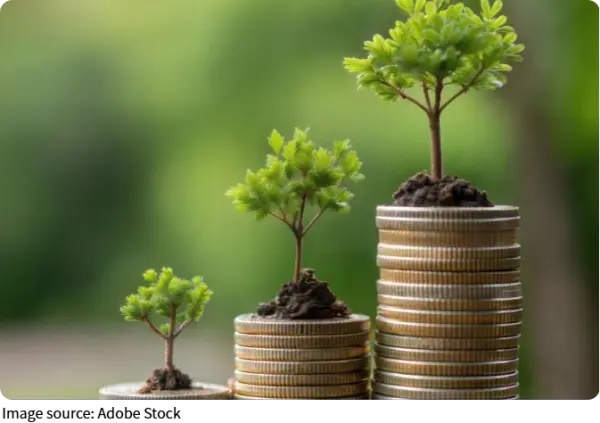
When nature gains a price
One of the biggest changes in modern finance is the growing effort to put a real value on environmental impact. Carbon pricing, sustainability-linked financing, and green investment products are all part of this shift. The key idea is simple: environmental impact is no longer free.
Energy waste or inefficient production doesn’t just affect the planet—it affects operating costs, investor trust, and long-term stability. Companies are slowly realizing that ignoring environmental factors doesn’t make them disappear; it often makes them more expensive later.
Where profit and planet align
There are already clear situations where financial performance and environmental responsibility support each other.
When companies reduce energy use, they often lower operational costs. When they minimize waste, they improve efficiency. When they adopt cleaner technologies, they may gain access to new investors who prioritize sustainable strategies.
Even consumer behavior is shifting. People are becoming more aware of where products come from and how they are made. This influences brand trust and long-term loyalty in powerful ways.
So in these cases, caring for the environment is not a cost—it becomes a practical advantage.
The challenges behind the transition
Of course, the picture isn’t perfectly smooth. Moving toward more responsible practices can require upfront investment. Upgrading systems, changing supply chains, or adopting cleaner technology can be expensive at first. This creates a real tension between short-term financial pressure and long-term value creation.
Some companies struggle here, especially in highly competitive markets where immediate returns matter. The challenge is not just financial—it is about patience and strategic thinking.
When Sustainability Becomes a Signal
The deeper lesson is that sustainability is not just a moral layer added after profit is calculated; it can also define how investors read risk, resilience, and long-term strategy. In their influential Management Science study, Robert G. Eccles, Ioannis Ioannou, and George Serafeim reported evidence that companies with stronger sustainability practices outperformed peers over the long term, while newer replication work and a later erratum mean that financial-performance claim should be presented carefully rather than treated as settled proof. George Serafeim, Charles M. Williams Professor of Business Administration at Harvard Business School, framed the investor side of this shift as the ability to “collect, analyze, and integrate environmental and social data in investment analysis,” creating opportunities for “portfolios with better risk/return profiles.”
A changing definition of value
What’s interesting is that the definition of “value” itself is evolving. A company’s strength is no longer measured only by revenue or profit margins. Investors are increasingly looking at risk exposure, environmental responsibility, and long-term sustainability. This shift is quietly changing how financial decisions are made. What once sat outside the balance sheet is slowly becoming part of it.
The result is a more complex but also more realistic picture of what a healthy business looks like.

Looking ahead
So, can profit and planet share the same balance sheet? The answer seems to be moving toward yes—but with conditions. It requires a mindset shift. Instead of treating environmental responsibility as a separate goal, businesses are beginning to see it as part of long-term survival and success.
Lykkers, maybe the real question isn’t whether both can coexist, but how deeply they are already connected in ways we are just starting to understand.
Because in today’s world, what benefits the planet is increasingly becoming what sustains profit—and that connection is only getting stronger.