Stable Energy Value

Naveen Kumar
| 14-06-2026
 · News team
Hello Lykkers! When investors look at renewable energy, they often compare solar and wind as if they are similar long-term infrastructure assets. Both generate clean electricity, both rely on natural forces, and both are considered core pillars of the energy transition.
But when you dig into the financial mechanics, one difference quietly reshapes everything: how these assets depreciate over their lifecycle.
Depreciation is not just an accounting concept here—it directly influences valuation, returns, refinancing potential, and even exit timing.
Why Depreciation Matters in Energy Finance
In infrastructure investing, depreciation is more than a bookkeeping entry. It reflects how quickly an asset loses economic efficiency over time.
For renewable energy projects, depreciation affects:
- Cash flow expectations
- Maintenance costs
- Asset resale value
- Investment exit timing
- Long-term return calculations
Solar and wind may produce similar outputs in theory, but their value erosion patterns are not the same in practice.
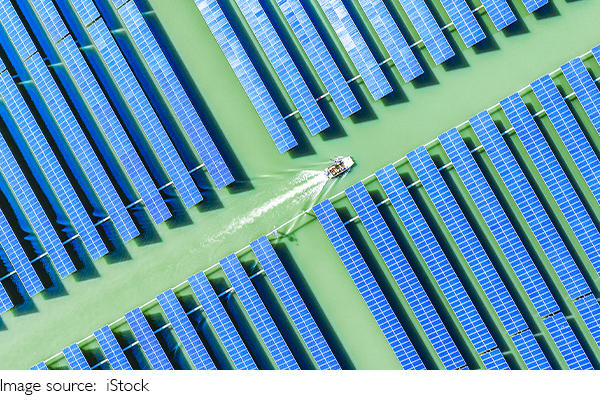
Solar Assets: Gradual and Predictable Decline
Solar energy systems tend to follow a relatively smooth depreciation curve.
Panels degrade slowly over time, usually at a predictable rate. This makes financial modeling more stable. Investors can estimate long-term output with fewer surprises, which is a major advantage in valuation.
However, solar assets face a different kind of depreciation pressure: technological obsolescence.
Even if panels still function, newer generations of solar technology may become significantly more efficient. This creates a subtle financial risk—older assets may remain operational but lose competitiveness in terms of output efficiency per unit of capital.
In other words, solar depreciation is less about physical failure and more about relative performance decline.
Wind Assets: Stepwise and Maintenance-Driven Depreciation
Wind assets behave differently.
Instead of a smooth decline, wind turbines often experience step-like depreciation patterns driven by maintenance cycles, mechanical stress, and component replacement events.
Key components such as gearboxes, blades, and generators may require significant repairs or replacements at different stages of the asset’s life. These events can cause sudden jumps in capital expenditure, affecting cash flow stability.
Unlike solar, where degradation is gradual, wind depreciation is more episodic and operationally intensive.
Cash Flow Stability vs Cost Volatility
This difference creates a major financial divergence:
Solar assets: more predictable revenue, lower operational disruption
Wind assets: higher maintenance uncertainty, but often higher peak output potential
Investors often weigh these trade-offs when building renewable portfolios.
Solar is frequently seen as a “steady income stream” asset class, while wind is treated as a “higher variability but higher yield potential” infrastructure play.
Expert Perspective on Asset Degradation and Capital Planning
A useful perspective comes from Mark Carney, who has highlighted in discussions on climate finance that long-duration infrastructure investments require careful consideration of risk, maintenance cycles, and system resilience.
Carney’s broader view of climate-related finance emphasizes that investors must account not just for upfront capital deployment, but also for long-term asset behavior under changing environmental and economic conditions.
This aligns closely with renewable depreciation dynamics—where long-term value depends as much on lifecycle performance as on initial installation.
Impact on Valuation Models
Because depreciation differs between solar and wind, valuation models also diverge.
Solar projects are often modeled using:
- Stable degradation curves
- Predictable output decline
- Long-term fixed cash flow assumptions
Wind projects require:
- Higher maintenance cost projections
- Component replacement schedules
- More variable output assumptions
As a result, wind assets often carry higher risk premiums in financial models, even when their revenue potential is strong.
Refurbishment and Repowering Effects
Another key difference appears in asset repowering strategies.
Wind farms are often candidates for repowering, where turbines are upgraded or replaced to extend asset life and improve efficiency. This can reset depreciation curves and significantly alter long-term valuation.
Solar assets, while also upgradable, tend to experience more gradual efficiency improvements rather than large-scale structural resets.
This means wind assets can have more “renewal events,” while solar assets evolve more continuously.
Why Investors Care About Lifecycle Timing
In finance, timing matters as much as total return.
An asset that depreciates slowly but steadily (like solar) provides predictable long-term income. An asset that depreciates unevenly (like wind) may require more active capital management but can offer opportunities for value recovery through repowering or optimization.
This affects how institutional investors allocate capital across renewable portfolios.
Final Thought
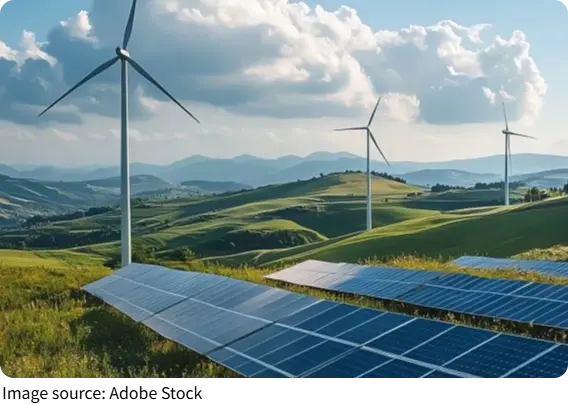
Solar and wind energy may sit in the same category of clean infrastructure, but their financial lifecycles tell very different stories.
Solar offers stability through predictability. Wind offers complexity through operational cycles.
And in the world of infrastructure investing, those differences in depreciation are not just technical details—they are the foundation of how value is created, preserved, and eventually realized over time.