Energy Asset Trading

Ravish Kumar
| 14-06-2026
 · News team
Hello Lykkers! When people think about renewable energy investing, they usually imagine wind farms being built, solar parks being installed, or governments launching new green projects. But there is another layer of this industry that rarely gets attention—and it might actually matter more to investors than new construction.
It’s called the secondary market for operational renewable projects.
And it’s where “finished” energy assets quietly change hands like financial instruments, long after the turbines are spinning and the solar panels are generating power.
What the Secondary Market Really Is
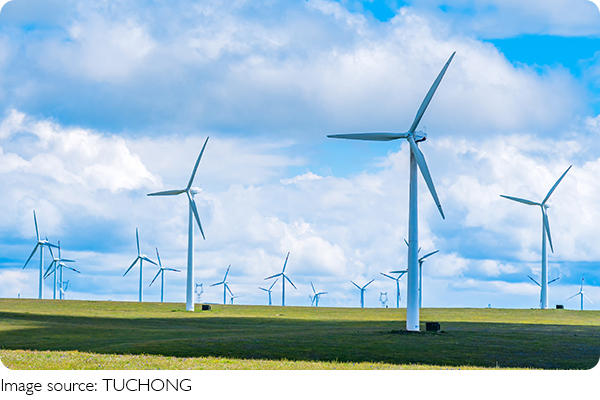
The secondary market refers to the buying and selling of renewable energy projects that are already operational.
These are not speculative projects on paper. They are fully built, producing electricity, and often already locked into long-term power contracts. In other words, they are income-generating assets.
Instead of building new infrastructure, investors purchase existing projects from developers or early-stage owners who want to recycle capital into new developments.
Why Investors Don’t Always Hold Long-Term
At first glance, you might assume developers want to keep renewable assets for steady income. But in reality, many sell early.
Why? Because renewable energy development is capital-intensive. Developers often face a choice:
- Hold and collect long-term cash flow
- Or sell early and free up capital for the next project
In many cases, selling early allows them to restart the development cycle and scale faster.
This creates a continuous flow of assets into the secondary market.
The Financial Logic Behind the Market
Operational renewable projects behave a bit like infrastructure bonds with physical assets attached.
They generate predictable revenue, often backed by long-term power purchase agreements (PPAs), which makes them attractive to institutional investors like pension funds and insurance companies.
These investors are not looking for explosive growth. They want stability, predictable yield, and inflation-linked returns.
That demand is what gives the secondary market its financial depth.
Where Value Is Actually Created
Interestingly, a lot of value in renewable energy is not created during operation—it is created during ownership transfer.
When a project moves from a developer to a long-term investor, valuation is reassessed based on:
- Contracted revenue streams
- Maintenance expectations
- Energy output stability
- Interest rate environment
- Risk perception of future regulation
Small changes in these assumptions can significantly shift project valuation.
This is why two identical wind farms can sell for very different prices depending on timing and market conditions.
The Role of Institutional Capital
Large institutional investors dominate this space.
Pension funds, sovereign wealth funds, and infrastructure-focused investment firms often prefer buying operational assets rather than developing them from scratch.
The reason is simple: reduced uncertainty.
Construction risk is eliminated, permitting risk is already resolved, and energy output data is available. What remains is a long-term income stream.
This makes operational renewable projects feel more like financial products than traditional infrastructure investments.
Expert Perspective on Energy Infrastructure Investing
A useful way to understand this shift comes from Fatih Birol, who has highlighted in global energy discussions that the transition to cleaner energy is not just about building new capacity, but also about scaling investment frameworks that allow capital to flow efficiently into existing energy systems.
His perspective reflects an important reality: the energy transition is increasingly driven by financial structures, not just engineering projects.
In other words, how assets are traded and owned is becoming just as important as how they are built.
Why This Market Keeps Expanding
The secondary market is growing because it solves a timing problem.
Developers need liquidity to build new projects. Investors want stable, already-operating assets. The secondary market connects these two needs.
As renewable infrastructure scales globally, this cycle becomes self-reinforcing:
1. Build project
2. Stabilize operations
3. Sell asset
4. Reinvest capital
5. Repeat
This creates a continuous pipeline of investment activity beneath the surface of the energy transition.
Hidden Risks Investors Still Watch
Even though these assets are operational, they are not risk-free.
Investors still evaluate:
- Long-term contract reliability
- Grid access constraints
- Maintenance and degradation
- Policy changes affecting pricing
- Interest rate sensitivity
Because these projects behave like long-duration income assets, small shifts in macro conditions can significantly affect valuation.

Final Thought
The renewable energy story is often told as a story of construction and innovation. But behind the scenes, there is a quieter financial system at work.
The secondary market for operational renewable projects is where energy infrastructure becomes financial infrastructure.
And in that space, the real game is not just generating power—it’s knowing when an asset is ready to be sold, transferred, and revalued in a constantly evolving capital market.