Digital Scarcity

Caroll Alvarado
| 10-06-2026
 · News team
Hello, Lykkers! Bitcoin often raises one simple but powerful question: why is it limited at all? In a world where digital things can be copied endlessly—photos, messages, even money in bank accounts—Bitcoin takes a very different path. It was designed with a fixed supply from the start, and that choice sits at the heart of its identity.
Unlike traditional money systems, where supply can expand depending on economic needs, Bitcoin follows a strict rule: there will only ever be 21 million coins. No more, no less. That limitation isn’t a flaw—it’s the foundation of how Bitcoin is meant to work.
The Idea of Digital Scarcity
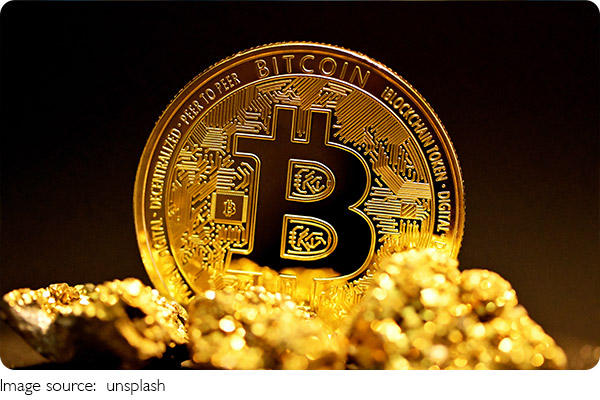
In the physical world, scarcity is easy to understand. Gold, land, and rare art pieces are limited because they cannot be produced endlessly. Their value often comes from that limitation.
Bitcoin tries to bring that same concept into the digital space. Since digital information can normally be copied without restriction, Bitcoin’s creator designed a system where duplication is impossible. Every unit is tracked, verified, and protected by a decentralized network.
This creates something unusual: a digital asset that behaves more like a scarce natural resource than traditional online data.
Why Unlimited Supply Would Break the System
If Bitcoin had no limit, its purpose would change completely.
A system with unlimited coins would struggle to maintain trust. The value of each unit would likely weaken over time because more supply would continuously enter the system. This is similar to how excessive money creation in traditional systems can reduce purchasing power.
By setting a fixed cap, Bitcoin avoids this uncertainty. Users know that the total supply will never change, which helps create long-term confidence in its value structure.
A Built-In Economic Rule
Bitcoin’s limited supply is not controlled by a company or government. Instead, it is written directly into its software rules.
New coins are created through a process called mining, where computers solve complex mathematical problems to validate transactions. But even this process follows a strict schedule. Over time, the number of new coins entering circulation gradually slows down until the maximum limit is reached.
This predictable system removes guesswork. Participants don’t have to worry about sudden policy changes affecting supply.
Expert Perspective on Digital Scarcity
According to Andreas M. Antonopoulos, a well-known Bitcoin educator and author, Bitcoin’s fixed supply is one of its most important innovations because it introduces absolute scarcity into a digital environment for the first time. He often explains that this design is what gives Bitcoin its role as a store of value rather than just a payment network.
His perspective highlights a key idea: Bitcoin’s value is not just about technology, but about trust in its rules.
How Scarcity Shapes Behavior
Limited supply changes how people interact with Bitcoin.
Instead of thinking in terms of unlimited availability, users tend to treat it as something that may become harder to acquire over time. This influences saving behavior, long-term holding strategies, and market psychology.
It also affects how Bitcoin is viewed globally. Some see it as a hedge against currency dilution, while others see it as a long-term digital asset with fixed issuance.
Why Predictability Matters
One of the strongest features of Bitcoin’s supply system is predictability. Unlike traditional monetary systems, where supply decisions can change based on economic policy, Bitcoin follows a transparent and unchanging rule set.
This predictability allows participants to understand exactly how new supply enters the market over time. For many users, this clarity is just as important as the limit itself.
The Bigger Picture
Bitcoin’s limited supply is not just a technical detail—it is the core idea that defines its economic model. It introduces scarcity into a digital world, removes uncertainty about future issuance, and creates a system where trust is built into code rather than institutions.
Whether someone sees Bitcoin as an investment, a technological experiment, or a new form of money, its fixed supply remains one of the most important reasons it continues to attract global attention.
In the end, Bitcoin’s scarcity is not about restriction—it’s about design. It is what gives a digital asset its sense of permanence in a constantly changing financial world.