Planet Value System

Santosh Jha
| 09-06-2026
 · News team
Hello, Lykkers! Something big is changing in the way money moves through the global economy. It’s not loud, and it doesn’t always make headlines—but it’s reshaping how companies grow, how investors choose assets, and even how governments think about long-term prosperity.
For a long time, economic success was measured in one simple way: how much we produce and how fast we grow. Today, another layer is being added—how much we preserve while we grow. That shift is slowly building what many now call an economy based on ecological value.
From Extraction to Balance
Traditional economic systems were built on extraction—taking resources from nature, turning them into goods, and measuring success by output. That model delivered rapid growth, but it also created hidden costs: environmental damage, resource depletion, and long-term instability.
The emerging shift is about balance. Instead of treating nature as an unlimited input, ecological value recognizes it as capital in its own right—something that must be protected, maintained, and accounted for in financial decisions.
This changes the core question from “How much can we extract?” to “How much can we sustain?”
Nature Becomes Financially Visible
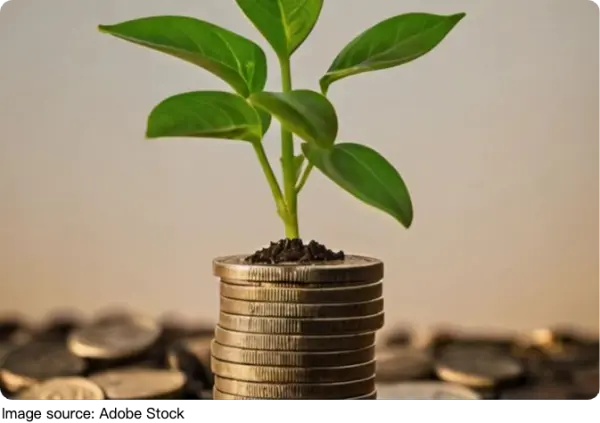
One of the most important developments in this transition is that environmental factors are no longer invisible in financial systems. They are being measured, priced, and integrated into investment decisions.
Carbon emissions, water usage, biodiversity impact, and land degradation are increasingly being translated into financial risk. Companies that harm ecosystems are starting to face higher costs, while those that protect them are gaining investor attention.
In practical terms, ecological responsibility is becoming part of balance sheets—not just sustainability reports.
Shared Value Changes the Profit Model
A key idea driving this shift is “shared value,” where business success and environmental health are not opposing goals, but interconnected ones.
Instead of profit coming at the expense of nature, companies are exploring models where protecting ecosystems also strengthens long-term earnings. Efficient resource use, waste reduction, renewable energy adoption, and circular production systems all reduce costs while improving resilience.
This is not charity—it is strategy. The strongest companies in this space are those that understand that ecological stability supports economic stability.
Investment Is Following Environmental Reality
Capital markets are also adjusting. Investors are increasingly considering environmental risks alongside financial performance. A company exposed to climate-related disruptions or resource shortages may be seen as riskier, even if its short-term profits look strong.
At the same time, sectors tied to clean energy, sustainable infrastructure, and resource efficiency are attracting long-term capital flows. The direction of money is slowly aligning with the direction of environmental necessity.
This doesn’t mean traditional industries disappear—but it does mean they are being pushed to evolve.
Expert Insight on Ecological Economics
Sir Partha Dasgupta, an economist from the University of Cambridge and author of The Economics of Biodiversity: The Dasgupta Review, has emphasized that nature should be treated as an asset that underpins all economic activity. His work highlights that failing to account for natural capital leads to distorted economic decisions that ultimately weaken long-term prosperity.
His perspective reflects a growing global consensus: economic systems cannot remain stable if the ecosystems they depend on continue to degrade.
Governments and the New Financial Language
Policy frameworks are also adapting. Governments are introducing environmental reporting requirements, carbon pricing mechanisms, and incentives for sustainable investment. These tools are gradually embedding ecological value into the structure of financial systems.
While approaches vary across regions, the direction is consistent—economic growth is being redefined to include environmental accountability.
A Quiet but Deep Transformation
What makes this shift so significant is its subtlety. There is no single moment where the economy changes. Instead, it evolves layer by layer—through regulations, investor expectations, corporate strategy, and consumer behavior.
Ecological value is becoming part of how decisions are made, even when it isn’t explicitly stated. Over time, this changes what “successful growth” actually means.
Where This Is Headed
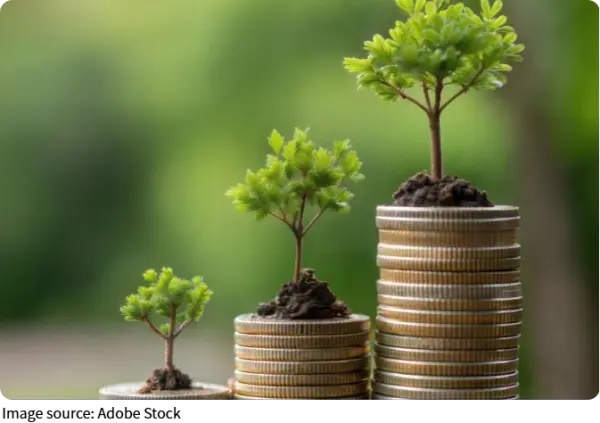
A global economy built on ecological value does not reject growth—it redefines it. Growth is no longer just about expansion, but about durability. Not just output, but balance. Not just profit, but continuity.
The future economy will likely be shaped by those who understand this dual responsibility: generating value while protecting the systems that make value possible in the first place.
And as this shift continues, one idea becomes clearer with every step forward—economic strength and ecological health are no longer separate conversations. They are becoming the same one.