Everyday Market Economy

Ravish Kumar
| 07-06-2026
 · News team
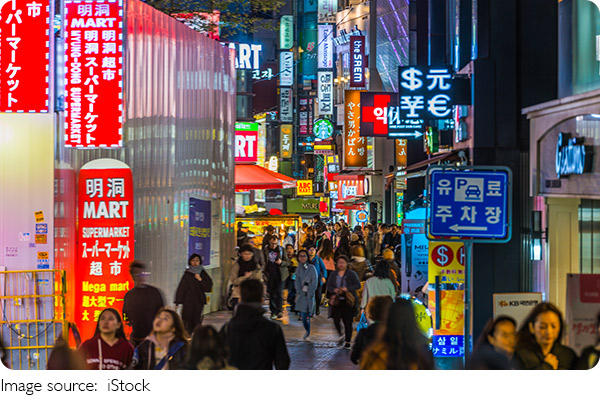
Hello, Lykkers! If you really want to understand how an economy feels at street level, skip the big financial headlines and walk through a local market. The colors, noise, bargaining voices, and daily trade aren’t just cultural scenery—they are a living system of wealth creation happening in real time.
Local markets are often overlooked in economic discussions, yet they play a powerful role in shaping how money circulates, how jobs are created, and how communities grow stronger from within.
Where Money Actually Circulates
Unlike large retail chains where profits often flow outward to corporate headquarters, local markets tend to keep money circulating within the community.
A vendor buys goods from nearby suppliers, sells them to local customers, and then spends that income again within the same area—on food, transport, services, and household needs. This repeated circulation is what economists often refer to as a local multiplier effect.
According to the Organisation for Economic Co-operation and Development, localized economic activity can significantly strengthen regional development by increasing internal spending flows and reducing dependency on external capital channels.

Small Traders, Big Impact
Each stall in a local market might seem small in isolation, but collectively they form a dense economic network.
Market vendors are often micro-entrepreneurs. They manage inventory, respond quickly to demand changes, and operate with thin but flexible profit margins. Their ability to adapt makes them a stabilizing force during economic uncertainty.
Because entry barriers are low, local markets also serve as one of the most accessible pathways to self-employment. For many households, they are not just places of trade—they are primary income sources.
Employment Without Formal Structures
Local markets generate employment in ways that don’t always show up in official statistics.
From stall operators and delivery helpers to transport workers and small-scale suppliers, a wide web of informal and semi-formal jobs depends on market activity. These roles may not always come with formal contracts, but they are essential for daily economic functioning.
This type of employment flexibility allows communities to absorb labor during periods when formal job markets are tight, reducing economic pressure at the household level.
Pricing, Demand, and Daily Economics
One of the most dynamic aspects of local markets is how quickly they respond to demand and price changes.
If the cost of goods rises, vendors adjust prices almost immediately. If demand falls, they shift product offerings or negotiate sourcing alternatives. This constant adjustment creates a real-time microeconomic system that reflects broader economic conditions faster than many formal retail environments.
For consumers, this flexibility often translates into affordability and choice. For sellers, it creates both opportunity and risk, depending on daily market conditions.
Informal Credit and Trust Networks
In many local markets, financial systems operate on trust as much as currency.
Vendors often rely on informal credit—borrowing goods from suppliers, settling payments later, or extending short-term credit to regular customers. These trust-based arrangements help keep trade flowing even when cash is limited.
While informal, these systems play a crucial role in sustaining liquidity at the community level, especially in regions where formal banking access may be limited.
Expert Perspective
According to Hernando de Soto, economist and president of the Institute for Liberty and Democracy, informal markets and small-scale enterprises represent a significant portion of economic activity in developing regions, often holding untapped capital potential that becomes visible only when properly integrated into formal systems.
His work highlights an important idea: local markets are not economically marginal—they are structurally central, even if underrecognized.
The Real Source of Community Wealth
Community-level wealth is not only about income; it is about circulation, opportunity, and resilience.
Local markets create jobs, support small entrepreneurship, improve access to goods, and keep money moving within neighborhoods. They also act as early indicators of economic change, reflecting shifts in prices, demand, and consumer behavior in real time.
For Lykkers, the bigger picture is simple but powerful: wealth does not only grow in boardrooms or financial centers. It also grows in everyday exchanges between people—at stalls, counters, and street corners where local markets quietly keep economies alive.