Low Carbon Prosperity

Liam Reilly
| 01-06-2026
 · News team
Hello Lykkers! The shift toward low-carbon economies is often framed around emissions reduction, renewable energy, and climate targets. But beneath all of that is a quieter transformation with major social impact: financial inclusion.
As economies decarbonize, they are also redesigning how financial systems work—making credit, banking, insurance, and investment more accessible to people who were previously excluded.
Understanding Financial Inclusion in a Green Transition
Financial inclusion means ensuring that individuals and businesses can access and use affordable financial services. In low-carbon economies, this goes beyond traditional banking. It includes green credit for clean energy, pay-as-you-go renewable systems, climate insurance, and participation in carbon markets.
What makes this shift important is that climate-focused financial systems often rely on digital platforms and decentralized infrastructure, which naturally lowers entry barriers for underserved populations, especially in rural or informal economies.
Renewable Energy Financing as an Entry Point
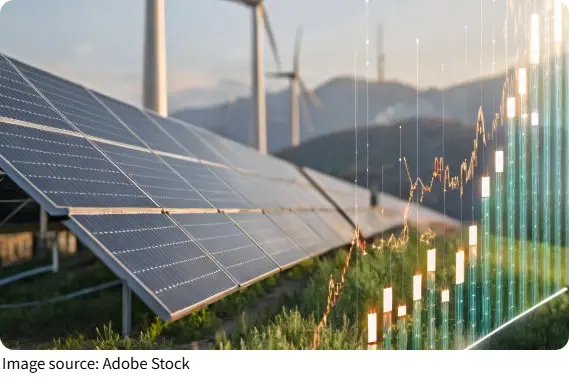
One of the strongest drivers of inclusion is distributed renewable energy—especially solar power. Instead of relying on expensive centralized electricity grids, households can now install solar home systems financed through microloans or mobile payment plans.
These “pay-as-you-go” models are particularly impactful in regions where people lack formal credit histories. As users make regular payments for energy, they effectively build a digital financial identity, which can later unlock access to broader financial services such as loans or insurance.
This approach turns energy access into a gateway for financial access.
Digital Finance and Green Credit Innovation
Fintech innovation is accelerating this shift. Many digital lenders now use alternative credit scoring models, analyzing utility payments, mobile money usage, or even energy consumption patterns to assess creditworthiness.
This is especially important for individuals in informal economies who are often excluded from traditional banking systems.
In addition, green lending programs are expanding. Small businesses adopting energy-efficient equipment or sustainable agriculture practices are increasingly eligible for targeted financing, often at lower interest rates due to climate incentives or blended finance structures.
Carbon Markets and New Income Streams
Another important pathway is the growth of carbon markets, particularly voluntary carbon offset systems. In some regions, farmers and local communities can earn income by engaging in activities like reforestation, soil restoration, or forest protection.
While still evolving, these systems are turning environmental stewardship into a monetizable asset, creating new income opportunities for rural populations that previously had limited access to formal financial systems.
Expert Insight on Climate and Financial Inclusion
Kristalina Georgieva has repeatedly emphasized that climate change is not only an environmental challenge but also a macroeconomic and inequality challenge. Under her leadership, the IMF has highlighted that climate shocks disproportionately affect low-income households and developing economies, and that climate finance must therefore prioritize resilience and access.
Her position underscores an important reality: climate finance is not just about funding green projects—it is also about ensuring that vulnerable populations gain access to financial systems that help them adapt, invest, and grow economically.
Remaining Structural Challenges
Despite strong progress, several barriers remain. Many climate finance programs still require documentation, collateral, or institutional access that excludes informal workers and smallholder farmers.
There is also a knowledge gap. Complex financial instruments such as carbon credits or blended finance structures are often difficult for everyday users to understand, limiting participation.
Finally, uneven infrastructure development means that the benefits of green finance are not distributed equally across regions.
Building a More Inclusive Low-Carbon Economy
A low-carbon economy has the potential to be more than a climate solution—it can also be a financial transformation engine. By linking energy access, digital finance, and climate policy, it creates pathways for millions of people to enter formal economic systems.
However, inclusion will not happen automatically. It requires intentional design: simple financial products, transparent carbon markets, strong digital infrastructure, and policies that prioritize vulnerable communities.
Ultimately, the success of the global green transition will be measured not only by reduced emissions, but also by how effectively it expands economic opportunity and financial access for all.