Smart Agriculture Capital

Mariana Silva
| 28-05-2026
 · News team
Hello Lykkers! If you’ve ever wondered how farming is keeping up with a world that’s changing faster than ever, you’re not alone. Something exciting is happening behind the scenes in agriculture—fields are getting smarter, machines are getting sharper, and investors are quietly putting serious money into ideas that could reshape how food is grown.
Agritech startups are at the center of it all, turning traditional farming into a data-driven, high-tech ecosystem that feels almost futuristic, yet is already unfolding today.
Why investors are paying attention
The big push into agritech comes from a simple reality: the world needs more food, but the resources to grow it are getting tighter. Weather patterns are less predictable, farmland is limited, and farmers are under pressure to produce more with fewer inputs.
That’s where venture capital steps in. Investors see agritech as more than just farming upgrades—they see scalable solutions to global food challenges. Startups in this space are not only improving efficiency, they’re also reducing waste and helping farming adapt to environmental stress. That mix of purpose and profit is hard for investors to ignore.
Farms powered by data and machines
Modern agritech doesn’t look like the farming of the past. It feels more like a blend of science lab and tech workshop spread across open land.
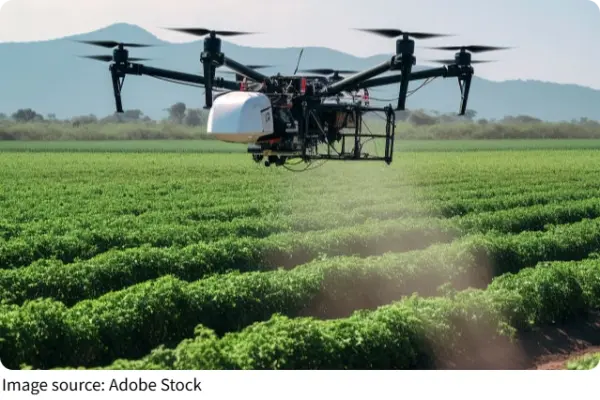
Artificial intelligence is now used to spot early signs of crop disease before the human eye can notice anything unusual. Internet-connected sensors placed in soil can track moisture levels in real time, helping farmers decide exactly when to water and how much. Drones fly over large fields, capturing detailed images that reveal crop health patterns from above. Even satellites are used to monitor land conditions across entire regions.
Then there’s robotics. Some startups are building machines that can plant seeds with precision, remove weeds carefully, and even assist in harvesting. Alongside all of this, biotechnology is helping create stronger crops that can handle harsh weather conditions and grow more efficiently.
It’s not about replacing farmers—it’s about giving them sharper tools and better information.
What experts are seeing in the market
Louisa Burwood-Taylor – Head of Media and Insights at AgFunder, an agrifood tech investment research and intelligence firm.
Burwood-Taylor has observed a clear shift in how investors approach agritech. Instead of treating it as experimental, capital is now flowing into companies that are ready to scale. She highlights that areas like farm automation, digital agriculture platforms, and alternative protein development are moving from early-stage ideas into serious commercial businesses. In her view, agritech is no longer a side bet—it’s becoming a core part of how the future food system is being built.
Where investment is going
Venture capital isn’t spreading evenly—it’s clustering around a few fast-growing areas.
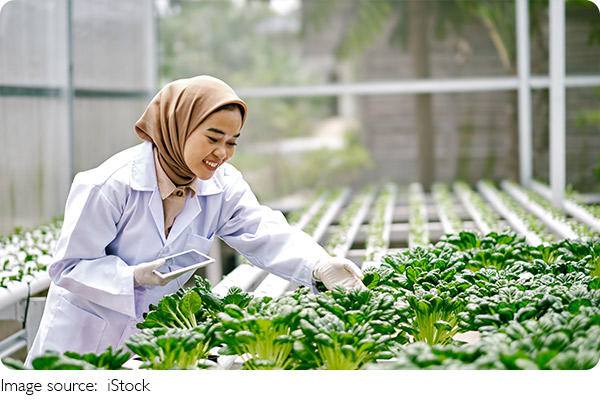
Controlled environment farming, like vertical farming systems, is attracting attention because it can produce crops year-round in tightly managed spaces. Supply chain technology is another hotspot, especially platforms that track food from farm to table with greater transparency. Investors are also drawn to regenerative agriculture tools that help improve soil health while reducing environmental strain.
Another fast-growing space includes alternative protein innovation, where startups are developing plant-based and lab-grown food options. At the same time, farm management software continues to grow steadily, helping farmers organize operations, track performance, and make smarter decisions using real-time data.
The real-world challenges
Even with all the excitement, agritech startups don’t have an easy path. Building hardware like robotics or indoor farming systems requires significant upfront investment. Unlike pure software businesses, these solutions often take longer to test and refine because they must work across real farming cycles.
There’s also the human factor. Many farmers are interested in new tools but may be cautious about switching from familiar methods. Cost, training, and trust all play a role in how quickly these technologies are adopted. On top of that, scaling agritech globally is complex because farming conditions vary so widely from place to place.
Looking ahead
Even with these hurdles, momentum in agritech continues to grow. The combination of rising food demand, environmental pressure, and rapid technological progress is pushing the sector forward in a powerful way.
What makes this space so interesting is how practical it is. These aren’t abstract innovations—they’re tools being used in real fields, by real farmers, right now. And as investment continues to flow in, we’re likely to see even more creative solutions emerge, blending science, engineering, and agriculture in ways that feel increasingly natural.
Agritech is no longer just about farming better. It’s about rethinking how food systems work from the ground up—and that shift is already well underway.