EV Money Shift

Declan Kennedy
| 25-05-2026
 · News team
Hello, Lykkers! Electric vehicles were once viewed as a niche technology aimed mainly at environmental goals. Today, they have become one of the most important economic stories in transportation. Beyond sleek designs and charging stations, a much larger transformation is happening.
Electric mobility is creating new industries, attracting investment, reshaping supply chains, and changing how capital flows through the automotive world. The electric vehicle revolution is no longer only about cars. It is about economics.
Electric Vehicles Are Creating New Markets
The rise of EVs is generating entirely new economic ecosystems. Traditional vehicle markets focused mainly on manufacturing and fuel systems. Electric mobility introduces additional industries including batteries, charging networks, energy storage, software platforms, and renewable energy integration.
Each electric vehicle sold supports a broader chain of economic activity. Charging infrastructure must expand, battery production grows, software systems evolve, and energy providers adapt to changing demand.
As a result, EV growth creates opportunities far beyond vehicle sales.
Entire industries are developing around the transition.
Investment Is Driving the EV Expansion
One reason the EV market is growing quickly is the scale of capital entering the sector.
Investment is flowing into battery factories, charging infrastructure, renewable energy projects, and mobility technology. Companies are competing not only to build vehicles but also to control supporting ecosystems.
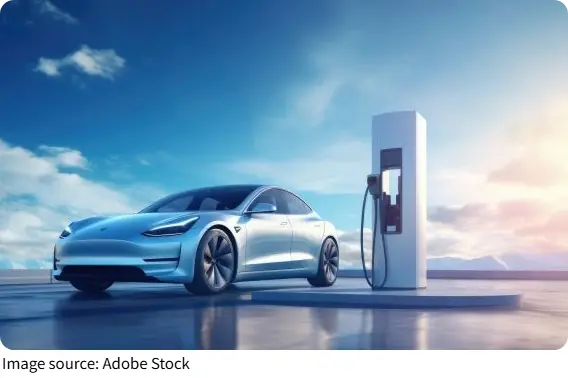
Charging networks themselves are emerging as economic assets. Public charging stations, fast-charging hubs, and integrated energy systems are becoming investment opportunities as adoption increases.
The shift is transforming transportation into an infrastructure story as much as an automotive one.
The Battery Economy Is Becoming Strategic
Batteries sit at the center of the electric vehicle economy.
Battery technology influences vehicle range, production costs, charging speed, and overall competitiveness. Because of this, battery manufacturing has become a strategic investment area.
Companies and investors are directing capital toward energy storage technologies, battery innovation, and supply chain development.
The battery sector is evolving into its own economic engine.
Its influence now extends beyond vehicles into renewable energy storage and future power systems.
Expert Perspective on Clean Mobility
Fatih Birol, Executive Director of the International Energy Agency, has highlighted that electric vehicles are playing an increasingly important role in energy transitions and reducing dependence on traditional fuel systems.
His perspective reflects a broader economic trend: transportation is becoming more connected with energy infrastructure and sustainability strategies.
Electric mobility is influencing not only roads but also energy markets.
Infrastructure Is Becoming Part of the Investment Story
Electric vehicles require more than production capacity.
Charging networks, renewable power systems, grid upgrades, and energy management technologies must expand alongside adoption.
This creates large infrastructure opportunities.
Investments in charging stations, smart grids, energy storage systems, and renewable integration are becoming essential parts of the EV economy.
The success of electric mobility increasingly depends on how efficiently these systems develop together.
Transportation and energy are becoming interconnected industries.
A Financial Revolution on Wheels
The electric vehicle revolution is creating more than cleaner transportation.
It is reshaping investment trends, infrastructure development, and industrial growth.
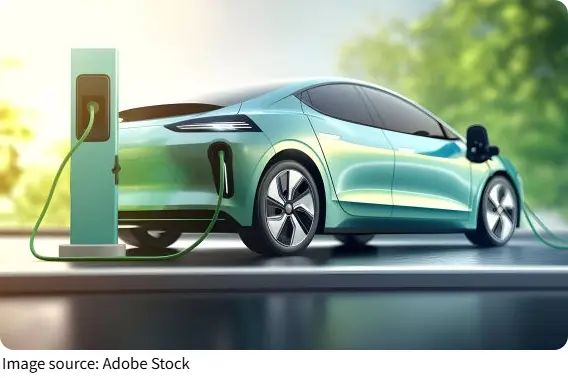
Vehicles, charging systems, energy networks, and technology platforms are becoming parts of one connected economic ecosystem.
What began as a transportation innovation is evolving into a major financial transformation.
And for investors, businesses, and economies, the road ahead may be powered by much more than electricity.