Machines Pay Themselves

Mason O'Donnell
| 22-05-2026
 · News team
Hello Lykkers! Imagine stepping into a world where your car doesn’t wait for you to pay at a charging station, your home energy system sells extra power while you sleep, and digital services settle costs in the background without a single tap or card swipe.
It sounds futuristic, but this quiet shift is already unfolding through machine-to-machine payments, where devices exchange value directly with each other and handle transactions on their own.
When Machines Start Paying
Machine-to-machine payments happen when connected devices are allowed to send and receive payments automatically based on set conditions. Instead of humans approving every transaction, the machines follow rules coded into their systems.
Picture an electric vehicle pulling into a charging point. The moment it plugs in, it recognizes the station, agrees on pricing, and completes payment instantly before the driver even checks their phone. Or think of a delivery drone that pays for temporary airspace access while navigating a busy city route. These exchanges are small, fast, and continuous, forming a financial layer that runs quietly underneath everyday digital activity.
This system depends on technologies like smart contracts and secure digital payment infrastructure that allow machines to “trust” each other without human intervention.
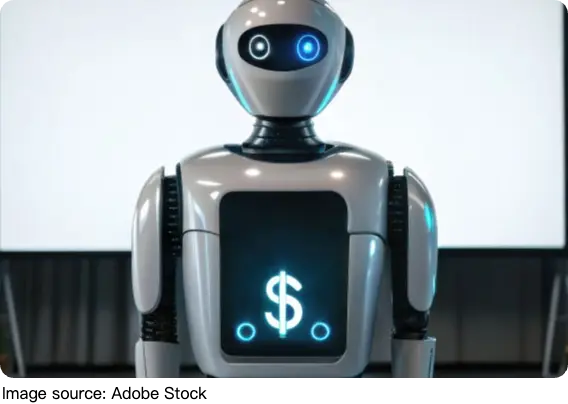
The Hidden Economic Engine
What makes this shift so powerful is not just convenience, but economics. Traditional payment systems were built for human behavior—one purchase, one invoice, one approval at a time. Machines don’t work like that. They generate thousands or even millions of micro-decisions every second.
In a machine-driven economy, payments can happen in fractions of a second and often involve extremely small amounts. This opens the door to services that charge based on exact usage rather than fixed pricing. Cloud computing, for example, can bill by milliseconds of processing time. Smart energy grids can reward households for every unit of electricity they feed back into the system.
When transaction costs drop close to zero, entirely new business models become possible. Services become more fluid, scalable, and responsive, adapting instantly to demand.
Where It’s Already Happening
While it may sound experimental, pieces of this system already exist around us. Modern vehicles increasingly handle automated toll payments and charging fees. Digital platforms in computing environments already track usage in real time and bill accordingly. Smart home energy systems can monitor consumption and adjust distribution without manual input.
Even logistics networks are beginning to experiment with automated payment flows between routing systems, storage hubs, and delivery devices. These are early steps, but they point toward a future where machines coordinate both actions and payments seamlessly.
Expert Perspective
According to Eswar Prasad, an economist at Cornell University and author of The Future of Money, digital payment systems that support automation could significantly reshape how value moves through economies. He has studied how financial innovation changes monetary systems and notes that programmable money may improve efficiency and access, but it also requires strong safeguards to prevent misuse and ensure stability.
His perspective highlights a key balance: while automated payments can unlock speed and scale, they also demand careful design so trust remains intact even when humans are no longer directly involved in each transaction.
Challenges Behind the Speed
As promising as this system is, it doesn’t come without complications. Security is one of the biggest concerns. When machines can send payments on their own, strong protections are needed to ensure they only act within safe boundaries.
There is also the challenge of compatibility. Different devices, platforms, and payment systems need to communicate smoothly across borders and industries. Without shared standards, the system could become fragmented and inefficient.
Regulation is another evolving area. Financial rules were originally designed for human-driven transactions, so adapting them to autonomous systems will require careful thought and coordination.
A Shift in Everyday Life
What makes machine-to-machine payments fascinating is how invisible they are becoming. You might not notice them directly, but they shape experiences around you—faster transport, smoother energy use, and more responsive digital services.
Over time, this could change how we think about ownership and access. Instead of buying things outright, we may simply use them when needed, with machines handling the cost in the background. The economy becomes less about individual transactions and more about continuous flows of value between systems.
For Lykkers, this shift is worth watching closely. It’s not just about technology upgrading payments—it’s about machines slowly becoming active participants in the economy, quietly reshaping how everyday life runs without ever asking for attention.