Cost Cutting Agriculture

Elena Rossi
| 22-05-2026
 · News team
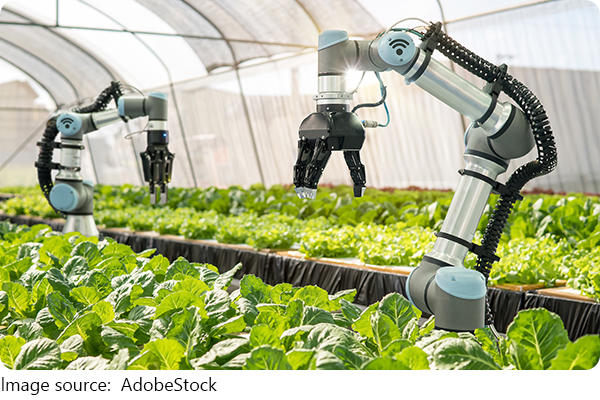
Hello, Lykkers! When you first look at a modern greenhouse like the one powered by robotic arms and smart sensors, it almost feels like something out of a futuristic lab.
But for many farmers and agribusiness owners, this is becoming everyday reality. Friends, behind all those moving machines and glowing data screens is something very practical: real, measurable cost savings that are changing how agriculture survives and grows.
When machines start doing the heavy lifting
Agricultural automation is built around one simple idea—let technology handle repetitive, time-consuming tasks so humans can focus on decision-making and oversight. In practice, this means machines taking over planting, watering, monitoring crop health, and even harvesting in some systems.
What makes this powerful from a financial perspective is the reduction in manual labor dependency. Labor has always been one of the highest operational costs in farming. When automated systems step in, the need for large seasonal workforces drops significantly, and that shift directly impacts overall spending.
Even more importantly, machines don’t get tired, which means tasks can be done with consistent timing and accuracy, reducing waste caused by delays or human error.
Precision farming that reduces waste
One of the biggest hidden costs in traditional agriculture is waste—water, fertilizer, and even crops that never reach harvest due to inefficiencies. Automation changes this by introducing precision systems that apply exactly what is needed, exactly where it is needed.
Sensors placed in soil and greenhouse environments continuously monitor moisture, nutrients, and temperature. Automated irrigation systems then adjust water delivery in real time. This prevents overuse, which not only lowers input costs but also protects crop quality.
Fertilizer use becomes more targeted as well. Instead of spreading resources evenly across large fields, smart systems distribute nutrients based on real crop needs. Over time, these small adjustments create significant financial savings.
The financial logic behind smart greenhouses
Controlled environments, like automated greenhouses, offer another layer of cost efficiency. While the initial setup can be expensive, operational costs tend to decrease steadily over time.
Energy use becomes more predictable due to smart climate control systems that adjust lighting, ventilation, and heating only when necessary. Crop cycles can also be optimized, allowing farmers to produce more output per square meter compared to traditional open-field farming.
According to analysis from the World Bank, improvements in agricultural technology and resource efficiency are key drivers in reducing long-term production costs while increasing food system resilience. This reflects a broader trend: smarter systems often require higher upfront investment but deliver stronger financial stability over time.
How automation reshapes farm economics
Beyond direct savings, automation also improves financial planning. When farms use data-driven systems, they gain better visibility into crop performance and resource usage. This helps reduce uncertainty, making budgeting and forecasting more reliable.
Maintenance costs for equipment can also decrease over time. While robots and sensors require upkeep, they often reduce wear and tear associated with manual machinery use and inefficient practices. Fewer mistakes in planting and harvesting also mean fewer losses to absorb at the end of each season.
Large agricultural technology studies, including research from the McKinsey Global Institute, suggest that automation in farming can significantly improve productivity while lowering input costs across labor, water, and fertilizers. These combined effects are what make the financial case so compelling for investors and farm operators alike.
A shift from effort to efficiency
What stands out most about agricultural automation is not just the technology itself, but the change in mindset it brings. Farming is no longer only about physical effort—it is increasingly about efficiency, precision, and data.
Instead of reacting to problems after they appear, automated systems help prevent them in advance. That shift alone reduces unexpected expenses, which are often the hardest to manage in agriculture.

Final Thoughts
Agricultural automation is quietly rewriting the financial structure of farming. By lowering labor dependence, reducing waste, and improving resource precision, it creates a system where costs are more controlled and predictable.
For farmers, investors, and food producers, this is more than just a technological upgrade—it’s a shift toward a more stable and efficient economic model. And as these systems continue to evolve, the gap between traditional methods and automated agriculture will likely keep widening in terms of both productivity and savings.