Rural Energy Revival

James Carter
| 20-05-2026
 · News team
Hello, Lykkers! Rural regions across the world have long struggled with economic decline.
Population loss, fewer employment opportunities, aging infrastructure, and limited investment have weakened many local economies over the past several decades.
Young workers often move to cities in search of jobs, leaving communities with shrinking labor forces and slower growth. But as the global energy transition accelerates, renewable infrastructure is emerging as a possible economic solution.
Why Rural Areas Are Becoming Renewable Energy Hubs
Rural regions hold a strategic advantage in renewable development because they typically have abundant land, strong wind resources, open spaces, and lower population density.
Large-scale wind projects, solar farms, biomass facilities, and transmission infrastructure often require extensive land areas that are more available in rural areas rather than urban centers.
This naturally places rural economies at the center of energy transition investments. The result is a substantial inflow of capital into areas that historically received limited infrastructure investment.
Renewable projects involve land preparation, engineering, equipment installation, logistics, maintenance operations, and long-term technical support, creating multiple layers of economic activity. Unlike traditional short-term construction projects, renewable assets often operate for decades, providing sustained economic benefits.
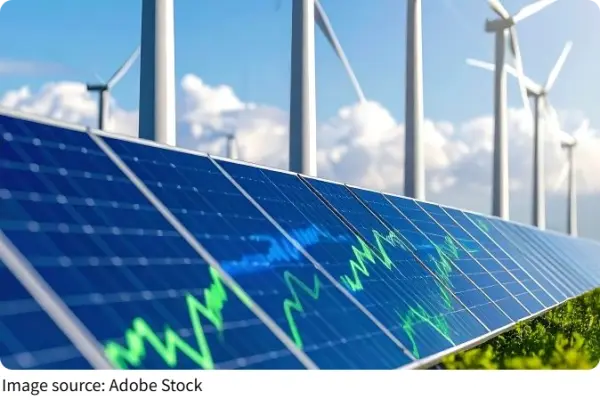
Employment and Income Opportunities
Job creation is one of the most visible benefits of renewable infrastructure. Construction phases create demand for engineers, electricians, transport workers, project managers, and local contractors. After completion, operations continue to require technicians, maintenance crews, monitoring specialists, and support services.
Beyond direct employment, renewable projects also stimulate secondary economic activity. Restaurants, accommodation providers, local suppliers, transportation services, and retail businesses often benefit during project development periods. Landowners may also receive lease payments for hosting wind turbines or solar infrastructure, creating additional income streams that can stabilize agricultural communities.
For regions dependent on declining industries, this diversification can reduce economic vulnerability.
Renewable Infrastructure and Local Investment
The financial impact extends beyond jobs. Renewable projects can increase tax revenues and attract supporting investments such as roads, transmission systems, internet infrastructure, and energy storage facilities. These upgrades may improve overall regional competitiveness.
In some regions, renewable development has also encouraged the growth of related sectors such as manufacturing, clean technology services, and equipment supply chains.
Distributed energy systems and community microgrids create another opportunity. Instead of relying entirely on centralized power systems, communities can generate and manage local energy resources. This reduces energy dependence while keeping more economic value within local areas.
Expert Perspective
Francesco La Camera, Director-General of the International Renewable Energy Agency (IRENA), has repeatedly emphasized that the energy transition should not only reduce emissions but also create economic opportunities and support inclusive development. This perspective is particularly relevant to rural economies, as renewable infrastructure can be both an environmental and economic solution.
This shifts renewable energy from being solely a climate initiative to becoming an economic strategy.
Challenges That Cannot Be Ignored
Despite its potential, renewable infrastructure alone cannot solve rural decline. Ownership structures matter significantly. If projects are financed and operated entirely by external investors, much of the economic value may leave the community. Local participation often determines whether financial gains remain within regional economies.
Infrastructure limitations also remain a challenge. Many rural areas still require upgrades to electricity grids, storage capacity, transportation networks, and digital systems.
Skills shortages present another issue. Renewable industries increasingly require technical expertise, meaning workforce training becomes essential. Without education and local participation, communities may struggle to capture the full benefits.

Can Renewables Revive Rural Economies?
Renewable infrastructure is not a guaranteed cure for rural decline, but it offers something many regions urgently need: new avenues for investment and economic activity. By combining energy development with local ownership, workforce programs, infrastructure upgrades, and regional planning, renewable projects can become catalysts for broader economic transformation.
The future of rural growth may depend not only on producing clean energy—but also on ensuring communities share in the economic value it creates.