Global Gold Habits

Caleb Ryan
| 10-05-2026
 · News team
Hello, Lykkers! Gold is one of the rare assets that carries both emotional and financial meaning across the world. While its value is universal, the way people buy and use gold differs greatly depending on culture, economy, and financial habits.
In some countries, it is mainly an investment tool, while in others it is deeply tied to tradition or personal security. Let’s explore how gold buying habits vary across different regions.
United States: Gold as a Financial Hedge
In the United States, gold is primarily viewed as an investment asset rather than a cultural product. Most buyers are interested in gold as a hedge against inflation, currency fluctuations, and stock market uncertainty.
Investors typically prefer gold ETFs, bullion coins, or bars instead of jewelry. This reflects a financial mindset where gold is part of a diversified investment portfolio rather than a personal or cultural possession.
Michael Townsend (Director of Legislative and Regulatory Affairs, U.S. Financial Markets Association) — specializes in investor behavior and commodity market regulation.
He explains that in Western financial systems, gold is often used as a “counterbalance asset,” meaning it helps stabilize portfolios during periods of market volatility rather than serving as a primary source of wealth accumulation.

Middle East: Gold as Wealth and Status
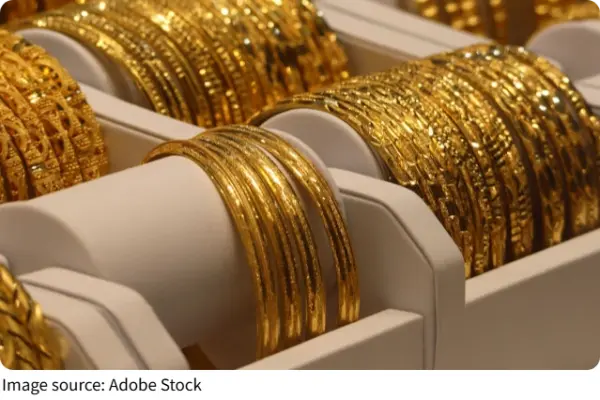
In many Middle Eastern countries, gold plays a powerful dual role—both financial and symbolic. It is commonly used in weddings, celebrations, and as gifts, often in the form of intricate jewelry designs.
High-purity gold is especially valued, and large purchases are often associated with social status and family wealth. Gold is not just stored; it is displayed, gifted, and passed through generations.
This strong cultural connection makes gold an essential part of financial planning and social tradition in the region.
Europe: Conservative and Strategic Investing
European buyers tend to approach gold in a more cautious and analytical way. Rather than buying large amounts of jewelry, many investors prefer financial products such as gold ETFs or small bullion holdings.
Gold is primarily seen as a long-term hedge against inflation and economic instability. Purchasing behavior is typically driven by financial planning rather than emotional or cultural influences.
This conservative approach reflects the broader investment culture in many European markets, where risk management is a priority.
Southeast Asia: Practical Wealth Storage
In Southeast Asia, gold is widely used as a form of savings. Many households prefer to convert surplus income into small amounts of gold over time.
Gold jewelry is often treated as “liquid savings,” meaning it can be easily sold during emergencies or financial stress. This makes gold a practical financial tool rather than just an investment or ornament.
This habit reflects a strong preference for tangible assets over purely digital or bank-based savings systems.
Africa: A Blend of Tradition and Financial Security
In many African countries, gold holds both cultural and economic importance. It is used in traditional ceremonies and celebrations while also serving as a reliable store of value in economies that may experience currency instability.
Gold is often seen as a protective asset, helping families preserve wealth during inflation or financial uncertainty. Its role is both symbolic and practical, making it one of the most trusted forms of savings in the region.
Final Thoughts
Gold buying habits around the world show how deeply culture and finance are connected. In some regions, gold is a structured investment tool; in others, it is a symbol of tradition, security, and social value.
Despite these differences, one truth remains consistent—gold continues to represent stability in an unpredictable financial world.
Understanding these global patterns helps us see why gold remains one of the most trusted and enduring assets across generations and economies.