Bitcoin’s Radical Journey

Arjun Mehta
| 15-12-2025
 · News team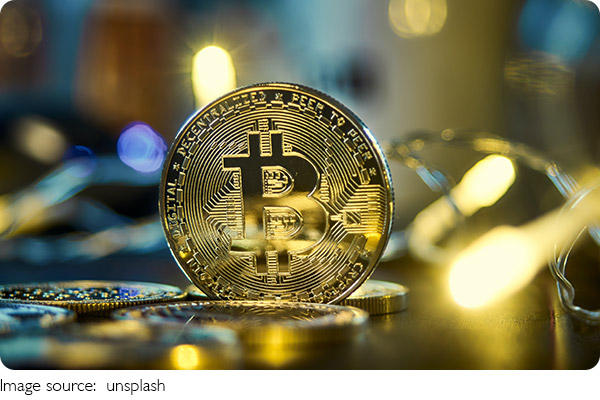
Hey Lykkers! Let's play a quick word association game. When you hear "Bitcoin," what comes to mind? Wild price swings? Digital gold? Mysterious internet money? Maybe all of the above.
But how did this intangible, purely digital asset go from a fringe idea to a trillion-dollar phenomenon discussed in congressional hearings?
Its story isn't just about code and cryptography; it's a tale of rebellion, belief, and the reimagining of what money can be. Let’s rewind the clock and trace the extraordinary journey of Bitcoin.
The Genesis: A White Paper in the Shadows
Our story begins not on a trading floor, but in an obscure online forum. On October 31, 2008, amidst the global financial meltdown, a person (or group) using the pseudonym Satoshi Nakamoto published a 9-page white paper titled “Bitcoin: A Peer-to-Peer Electronic Cash System.”
The opening line was a manifesto in itself: "A purely peer-to-peer version of electronic cash would allow online payments to be sent directly from one party to another without going through a financial institution." In an era when trust in banks had cratered, Satoshi proposed a radical alternative: a decentralized network where trust is placed in open-source code and cryptography, not in fallible middlemen. As cryptocurrency historian Nathaniel Popper notes: "Bitcoin emerged as a powerful force against centralized banking and government control."
The First Block & The Pizza That Made History
On January 3, 2009, the Bitcoin network went live with the mining of the Genesis Block. Embedded in this first block was a headline from The Times newspaper: “Chancellor on brink of second bailout for banks.” This text is often cited as a critique of the traditional banking system.
For over a year, Bitcoin had no monetary value; it was just a fascinating experiment among cypherpunks and cryptographers. That changed on May 22, 2010, when programmer Laszlo Hanyecz famously paid 10,000 BTC for two Papa John’s pizzas. That first real-world transaction, now celebrated as "Bitcoin Pizza Day," gave Bitcoin a price: about $0.0025 per BTC. Today, those pizzas are worth hundreds of millions. This event proved Bitcoin could function as a medium of exchange, however humble its beginnings.
Rising from the Underground: Silk Road and Beyond
Bitcoin’s anonymity (or more accurately, pseudonymity) made it the perfect currency for the dark web’s most infamous marketplace, Silk Road. While this association tarnished its reputation, it also proved its resilience.
Despite the FBI shutting down Silk Road in 2013 and seizing assets, the Bitcoin network itself kept running, immutable and unstoppable.
The Mainstream Tug-of-War: Volatility and Validation
The 2010s were a rollercoaster. Spectacular booms and brutal busts ("crypto winters") became its hallmark. Yet, with each cycle, infrastructure grew: regulated exchanges like Coinbase emerged, the "blockchain" concept was adopted by corporations, and Wall Street began to pay attention.
The ultimate signal arrived in 2021, when El Salvador made Bitcoin legal tender, and major institutions like Tesla and MicroStrategy added it to their corporate treasuries. It was no longer just "internet money."
Lykkers, the history of Bitcoin is still being written. From a silent genesis block to a global financial lightning rod, its journey challenges our deepest assumptions about value, trust, and the power of decentralized ideas. It’s a story that began with a vision of sovereignty and continues to evolve, one block at a time. Whether you see it as an investment, a technology, or a movement, one thing is clear: it has irrevocably changed the conversation about money.